

Somatic Movement
What is Somatic movement?
Somatic comes from the Greek word soma, meaning “body.” Somatic movement refers to practices that explore the connection between the body and mind, cultivating awareness of physical sensations, patterns, and emotional states. There are many different modalities within the field of Somatics — in fact, yoga itself can be considered a somatic practice.
Most of what we blame on “aging” (stiffness, persistent tightness, posture collapse, recurring back/neck/shoulder pain, reduced range of motion) is often not primarily structural degeneration — it’s learned, involuntary muscle contraction controlled by the nervous system.
The term for this idea is called Sensory-Motor Amnesia (SMA), where the brain gradually loses accurate sensory awareness and voluntary control over certain muscle groups after stress, injury, or repetitive patterns, so those muscles stay partially contracted “by default.” This causes most of the chronic pain we experience.
Somatic movement is a practice of self-education to identify these patterns of SMA. We go into the tension and slowly release, which teaches the muscles how to relax. By learning how to relax, this will lead to improved function — all building towards more efficient movement. Benefits: reduced pain, movement becomes stronger and less forceful, increased mobility, stronger connection to self. Physical release can also lead to emotional release.
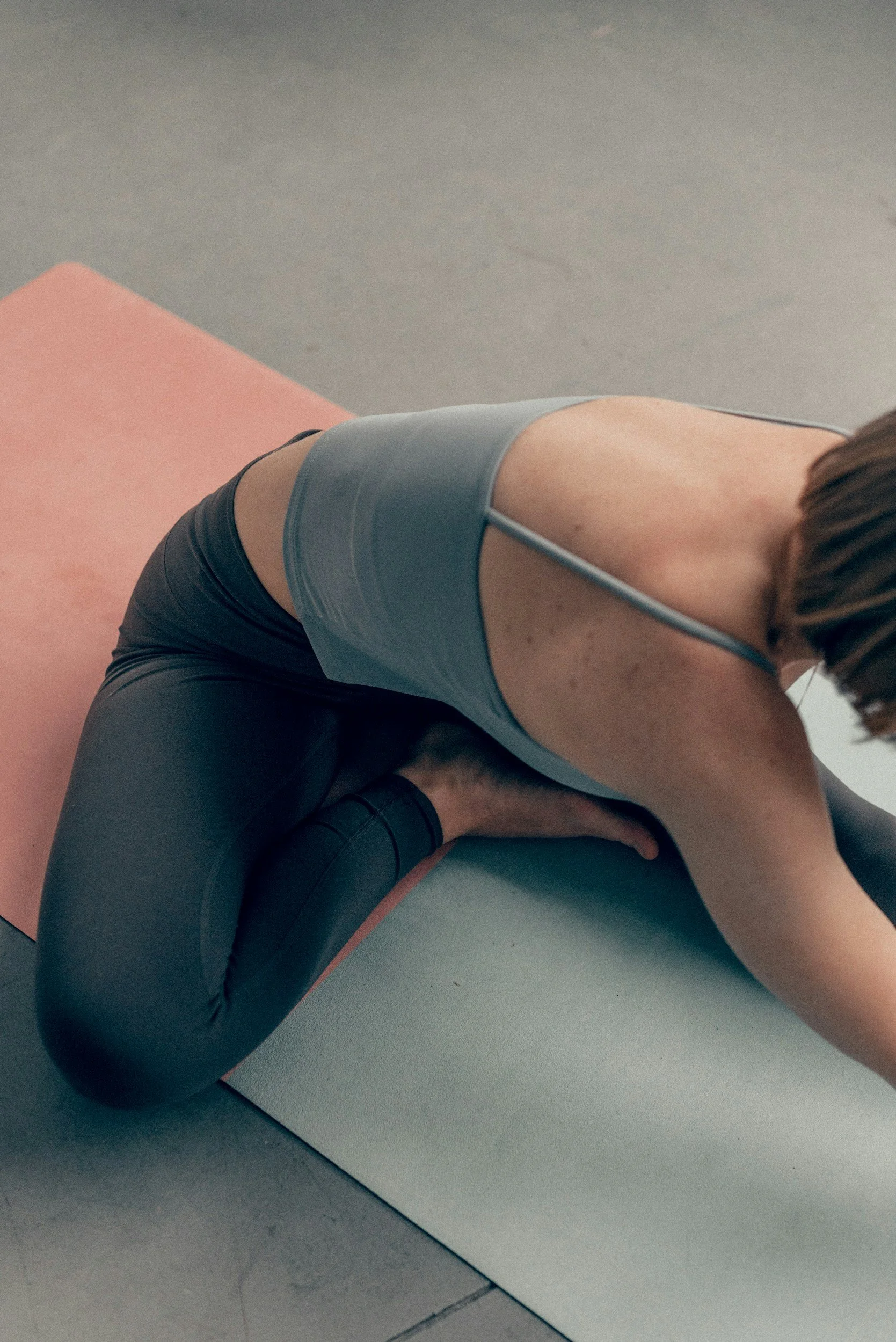

How will the Somatic offering at Samata Yoga Studio differ from a typical yoga experience?
In her sessions, Alexa allows the body to lead the way, following sensations as they arise. She may integrate a combination of the following approaches, also drawing upon her training as a yoga teacher:
Somatic Attachment Therapy: A holistic, body-centered approach to attachment-based therapy that deepens understanding of the body’s relationship with developmental and relational wounding and healing.
Clinical Somatic Education (CSE)*: A neuromuscular approach that uses pandiculation to retrain muscle memory and relieve chronic pain.
*Alexa will complete the first phase of her Clinical Somatic Education training by November 16, 2025, with additional education to follow.
How can Somatic movement support other modalities, such as yoga, or strength training?
Somatic movement enhances body awareness and helps release unconscious tension. This allows clients to engage more effectively in training and active yoga sessions and relax more deeply in stretches and yin practices, amplifying the results.

Who is a good candidate for Somatic movement?
Somatic movement may benefit clients who:
Experience chronic muscle tightness or pain without a clear medical explanation.
Struggle with anxiety, depression, numbness, disconnection, defensiveness, or a sense that parts of themselves feel hidden or inaccessible.
Have difficulty sleeping, experience racing thoughts or shallow breathing, and find it hard to slow down.
Feel “in their head” often and disconnected from their body.
What conditions can it help with?
Somatic movement can support individuals experiencing:
Joint and muscle pain
Neck, shoulder and back pain
Sciatica
Sacroiliac Joint Pain
Hip, knee, and foot pain
Sacroiliac dysfunction
Repetitive use injuries
Postural imbalances
Plantar Fasciitis
Tension headaches
Accident traumas and whiplash
Breathing problems
Anxiety and depression
Frozen shoulder syndrome
Temporomandibular Joint Dysfunction (TMJ)
What are the benefits of Somatic movement?
Potential benefits include:
Releasing chronic muscle tension
Improving posture and muscular control
Preventing recurring injuries and joint degeneration
Enhancing flexibility, range of motion, balance, and coordination
Reducing stress and anxiety
Improving sleep and breathing
Supporting emotional regulation and resilience
Deepening relationships and capacity for joy and trust
Restoring a sense of safety and ease within the body
In 2022, a peer-reviewed study of 103 patients with chronic lower back and/or neck pain found that, after an average of three sessions and continued home practice, lower back pain was reduced by 81% and neck pain by 80%.